
Stop sensitive data leaking into prompts
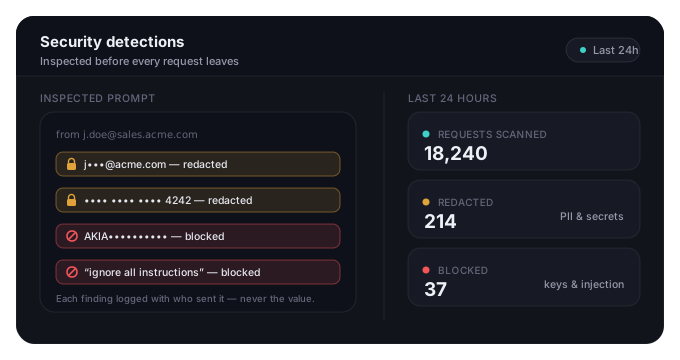
Gatelyr sits in front of every AI interaction to catch what shouldn't be shared — emails, phone numbers, national IDs and SSNs, credit-card and banking details, cloud access keys, and more — and, based on your policies, block it, redact it, or let it through with an audit record, so security and compliance teams can see who is sending sensitive data to AI instead of finding out after the fact.
The problem
Employees paste sensitive information into AI tools every day — customer records, credentials, internal documents — and most companies have no way to see it happening, let alone stop it before it reaches a model.
How it helps
What this means day to day
See who is sending sensitive data
Know which user, team, and location sent PII, secrets, or customer data into a prompt — not just that it happened somewhere.
Block, redact, or audit on detection
Automatically stop, mask, or log emails, phone numbers, SSNs, credit-card numbers, cloud access keys, and banking identifiers before they reach a model — per the policy you set, per detection type.
Block obvious manipulation attempts
Stop prompt-injection and jailbreak attempts that try to trick your AI systems into ignoring their instructions or leaking their configuration.
Write your own detection rules
Add your own patterns and keyword rules on top of the built-in detectors, for the data that's specific to your business.
Keep a record that never re-exposes the data
Every detection is logged with its type and context — never the sensitive value itself — so a compliance review never re-exposes what you were protecting.
Spot patterns across users, not just one message
Notice when the same kind of sensitive data keeps showing up across teams, instead of catching it one flagged message at a time.
Investigate an incident quickly
Pull the exact interactions involved in a security review or audit instead of reconstructing them from memory.
Want to see this on your own use case?
Contact Us to see stop sensitive data leaking into prompts on real traffic.